The greatest enemy of fishers is waste. We pull more rubbish than fish from our nets. Our dream is to see that amount go down. Now, through the programme, we are recognised and paid for this work.
Branca, an artisanal fisherwoman involved in the project.
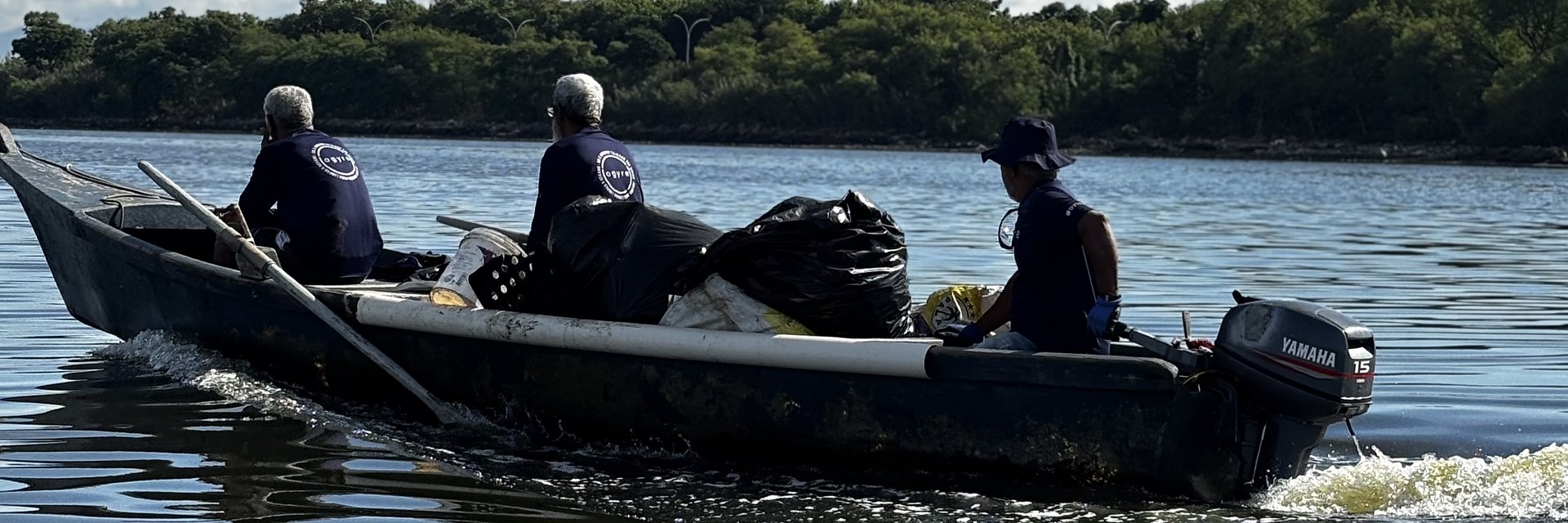
A team of artisan fishers working in Rio de Janeiro's Guanabara Bay, have reached a major milestone with 500 tonnes of solid waste, mostly plastic, removed from their fishing grounds.
Each week, around their days spent fishing, they switch their catch from fish to rubbish, and go out in their traditional boats to spend the day picking up waste from the water, mangroves and beaches. Their actions are funded through the ‘Fishing for Litter’ project managed by Brazilian not-for-profit BVRio in partnership with Italian social enterprise Ogyre.
“The greatest enemy of fishers is waste. We pull more rubbish than fish from our nets. Our dream is to see that amount go down. Now, through the programme, we are recognised and paid for this work.” Branca, an artisanal fisherwoman involved in the project.
Of the 506 tonnes collected to date, 80% are types of plastic including rigid and flexible plastic, upholstery foam, footwear (mostly flip-flops), rubber (tyres) and textiles. The rest is glass, electronic waste, metals, construction waste, and mixed material waste including drinks cartons.
Since 2020, BVRio has supported the fishing communities of Guanabara Bay, engaging artisanal fishers in marine litter collection as a way to increase their income and strengthen the local economy.
“The programme goes far beyond environmental impact. It promotes the creation of a dignified and purpose-driven market that can transform lives and strengthen an entire value chain. The challenge of cleaning up Guanabara Bay, and other areas like it, is immense and requires continuous and coordinated work. Which is why we have established a productive chain focused on waste recovery and recycling.” Pedro Succar, BVRio Circular Economy Specialist.
In 2021, the original project was published on the Circular Action Hub, the world’s largest directory of circular economy solutions created by BVRio to connect projects with funders. This visibility enabled a partnership with Ogyre, to be established in November 2021, which consolidated the programme’s operations in Guanabara Bay. The initiative has since benefited more than 100 local fishers and attracted new funders such as Ocyan (2023–2024).
Juliana Miranda, BVRio Circular Economy Analyst, works closely with the fishers, and noted, “Being with the fishers every week shows how much the project has transformed their daily lives. More than collecting waste, they now see themselves as part of the solution.”BVRio facilitates the activities, connecting fishing communities with recycling cooperatives, public agencies and private companies to strengthen the social and economic foundations needed to keep this work active and sustainable.
As a result of this process, and with BVRio’s support, the fishers organised themselves autonomously, creating the Marine Waste Collectors’ Cooperative (COOPROMAR), the first of its kind in Brazil. This milestone marks the consolidation of community leadership and the deep rooting of this work within the local communities.
Each week, around their days spent fishing, they switch their catch from fish to rubbish, and go out in their traditional boats to spend the day picking up waste from the water, mangroves and beaches. Their actions are funded through the ‘Fishing for Litter’ project managed by Brazilian not-for-profit BVRio in partnership with Italian social enterprise Ogyre.
“The greatest enemy of fishers is waste. We pull more rubbish than fish from our nets. Our dream is to see that amount go down. Now, through the programme, we are recognised and paid for this work.” Branca, an artisanal fisherwoman involved in the project.
Of the 506 tonnes collected to date, 80% are types of plastic including rigid and flexible plastic, upholstery foam, footwear (mostly flip-flops), rubber (tyres) and textiles. The rest is glass, electronic waste, metals, construction waste, and mixed material waste including drinks cartons.
Since 2020, BVRio has supported the fishing communities of Guanabara Bay, engaging artisanal fishers in marine litter collection as a way to increase their income and strengthen the local economy.
“The programme goes far beyond environmental impact. It promotes the creation of a dignified and purpose-driven market that can transform lives and strengthen an entire value chain. The challenge of cleaning up Guanabara Bay, and other areas like it, is immense and requires continuous and coordinated work. Which is why we have established a productive chain focused on waste recovery and recycling.” Pedro Succar, BVRio Circular Economy Specialist.
In 2021, the original project was published on the Circular Action Hub, the world’s largest directory of circular economy solutions created by BVRio to connect projects with funders. This visibility enabled a partnership with Ogyre, to be established in November 2021, which consolidated the programme’s operations in Guanabara Bay. The initiative has since benefited more than 100 local fishers and attracted new funders such as Ocyan (2023–2024).
Juliana Miranda, BVRio Circular Economy Analyst, works closely with the fishers, and noted, “Being with the fishers every week shows how much the project has transformed their daily lives. More than collecting waste, they now see themselves as part of the solution.”BVRio facilitates the activities, connecting fishing communities with recycling cooperatives, public agencies and private companies to strengthen the social and economic foundations needed to keep this work active and sustainable.
As a result of this process, and with BVRio’s support, the fishers organised themselves autonomously, creating the Marine Waste Collectors’ Cooperative (COOPROMAR), the first of its kind in Brazil. This milestone marks the consolidation of community leadership and the deep rooting of this work within the local communities.